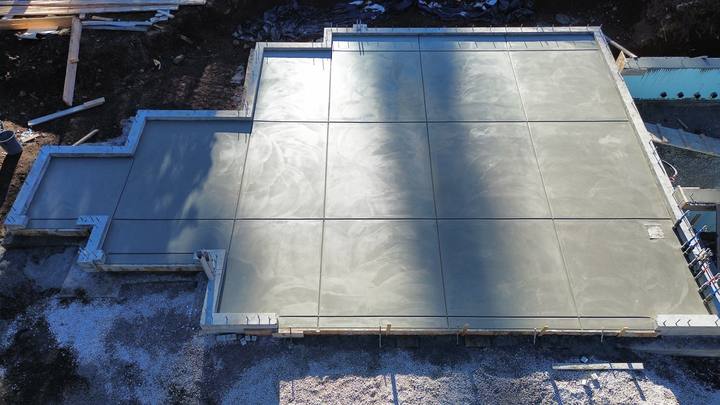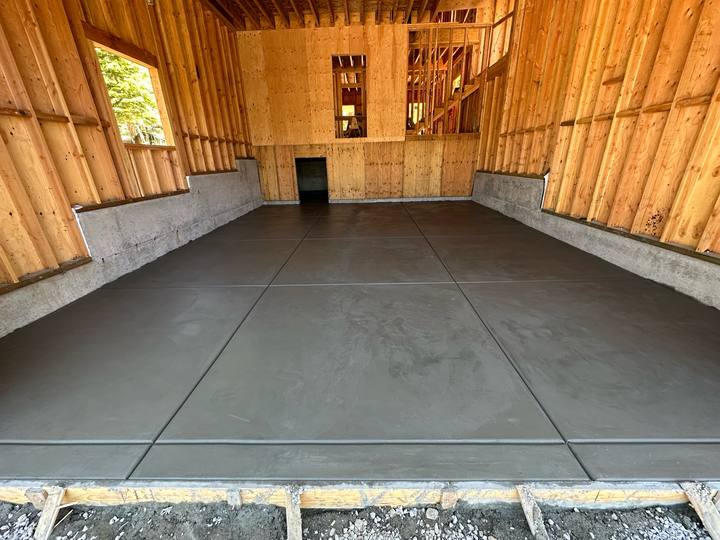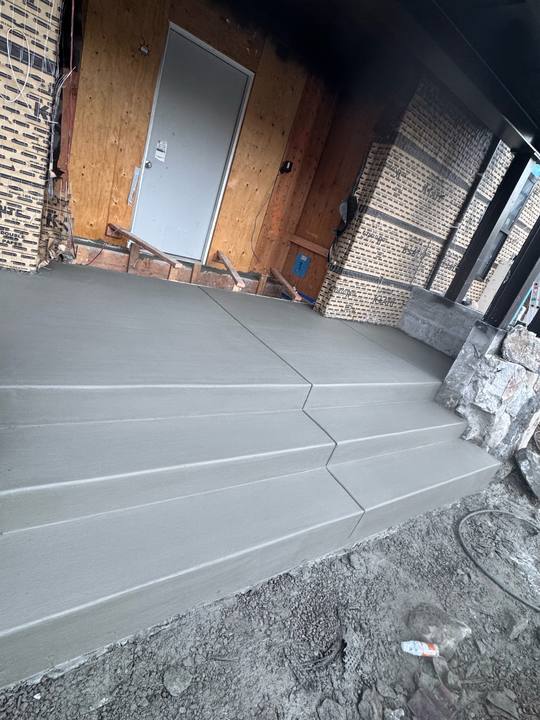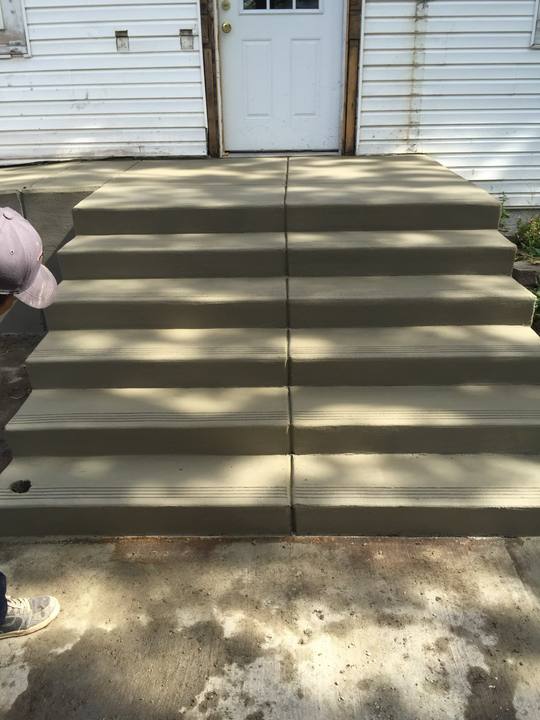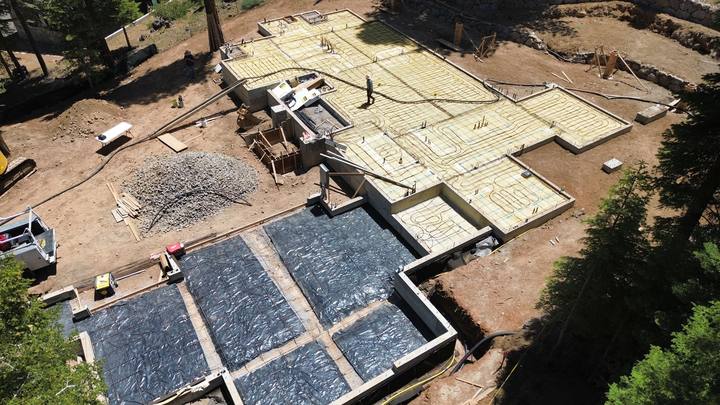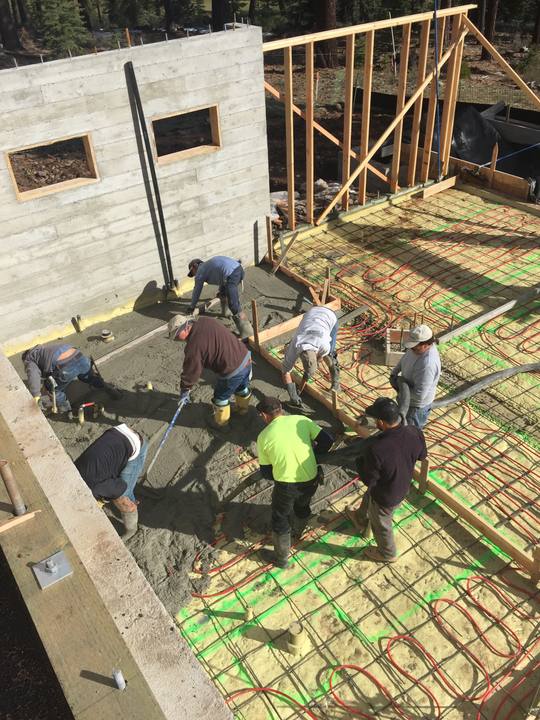
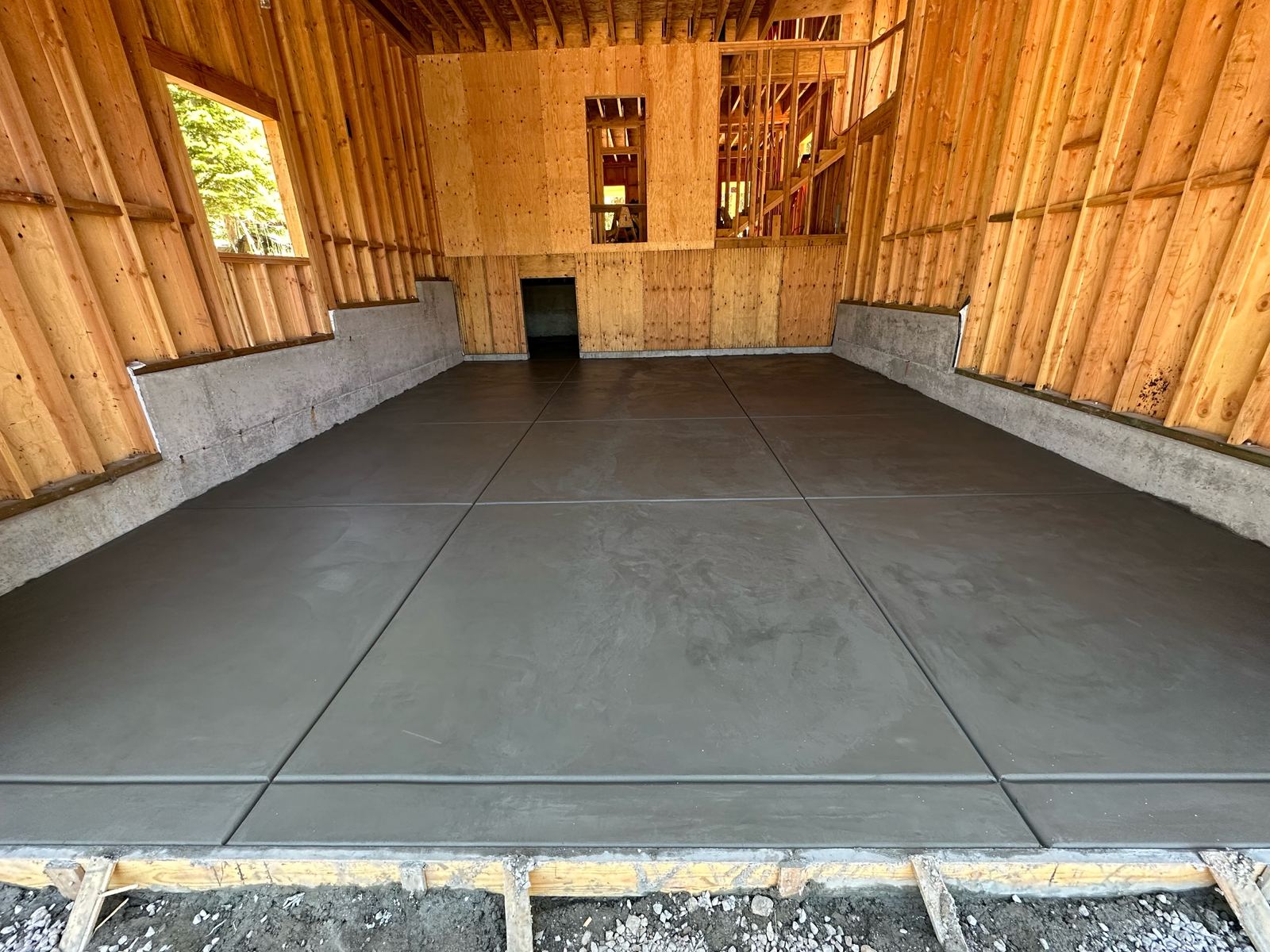
A slab always cracks. You choose where.
Concrete shrinks as it cures, and shrinkage puts a slab in tension it cannot carry, so it relieves itself by cracking. That is physics, not workmanship, and no contractor can promise you otherwise. What workmanship decides is where. Control joints are deliberate weak lines, laid out to a spacing rule and cut within hours of the pour, that give the crack somewhere planned to happen — in a straight line you read as a joint. Skip them, space them wrong, or cut them a day late and the slab picks its own route: a wandering crack across the middle of your garage floor, which cannot be closed and cannot be sanded out. Underneath, a base that was not compacted lets the slab settle unevenly on top of it, and that crack steps — one side sits lower than the other, and the lip catches everything that rolls across it.